
"Our Most Dangerous Character Defects”
Hermann Göring, Douglas Kelley, and the Psychology America Refused to Accept

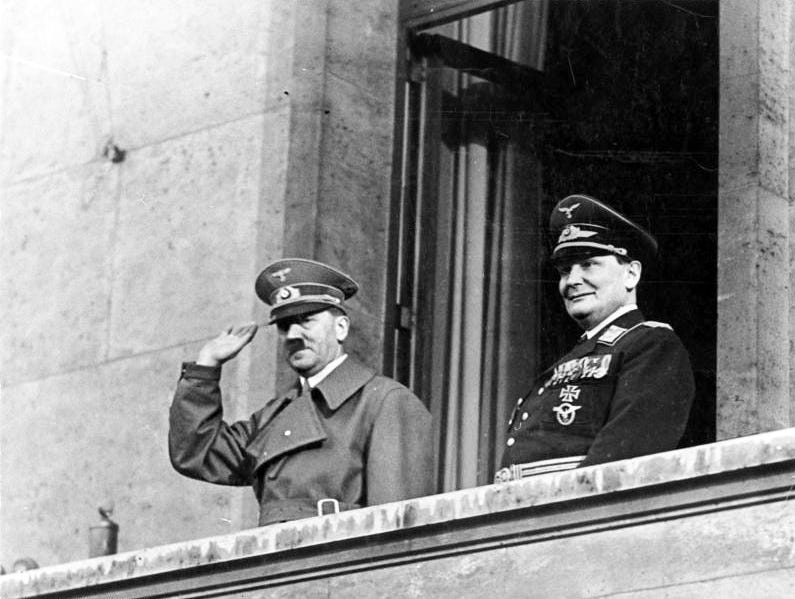
The first lie every society tells itself about atrocity is that it requires monsters. A second lie follows neatly behind: monsters live somewhere else. Douglas McGlashan Kelley dismantled both lies.
Kelley was an American psychiatrist dispatched in 1945 to evaluate the mental state of Nazi leaders before they could be tried for industrial murder. The task sounded clinical. Its implications were spiritual. He arrived expecting madness and left having witnessed something else: calculation, ambition, cowardice, and the banality of power.
The men who organized catastrophe were not insane. They were competitive. They were vain. They were efficient. They were, in the only way that matters, normal.
This discovery disoriented Kelley. It should have disoriented us.
Diagnosis versus absolution
Medicalizing evil is seductively humane and morally evasive. If Nazis were crazy, then civilization could sleep. If genocide were pathology, then politics could wash its hands. Kelley refused that anesthesia. He searched for illness and found incentives. He searched for damage and found desire.
A few defendants suffered true mental breaks. Most did not. The frightening truth was not that Nazism attracted the sick; it was that it rewarded the ordinary.
Kelley’s work did not say, “No one is responsible.” It said the opposite: responsibility does not evaporate just because intelligence remains intact. Sanity is not virtue. It is merely capacity.
From courtroom to living room
What is less known is that Kelley did not retreat into academic obscurity after Nuremberg. He didn’t whisper his conclusions into scholarly journals. He taught. He lectured. And he went on television.
In The Criminal Man, a 1950s public series on crime, Kelley made a choice that reveals everything about his thinking. He did not present Hermann Göring, the second-in-command to the Nazis in the Third Reich, as a historical freak. He presented him as a specimen in a criminal taxonomy.
He called Göring a “psychopathic criminal” and then uttered a sentence that may be the scariest in American broadcasting history: “These are the kind of people who will willingly climb over the bodies of half the population if by so doing they can control the other half.”
Then, with surgical precision, he delivered the pronoun that converted analysis into indictment: “These are our most dangerous criminal character defects.”
This was not a slip. It was a thesis.
Kelley did not export fascism to Germany. He imported it into American psychology. He was saying, in effect: if Nazism is a disease, it is not geographic; if it is a personality structure, it is not extinct; if it is an appetite for dominion, it is not foreign.
The silence that answered him
Kelley also wrote the book 22 Cells of Nuremberg. As researcher Jack El-Hai would explain in The Nazi and the Psychiatrist,
“[Kelley] emphasized that his book was not for psychiatrists, other physicians, or academic specialists—he intended it to influence the thinking and behavior of the American public. Kelley hoped readers would understand the qualities that allowed a group of men to cruelly dominate a country and let them believe they had the right to do so. He wanted people to see that anyone could become those men, that America could become Germany. The United States was at a crucial moment of change, and the understanding he had brought home from Nuremberg could shine a light on the right path to follow. The Nazis, he warned, were you and me—given the slightest twist of fate. In broadly optimistic postwar America, he sounded slightly paranoid.”
Kelley’s book went out of print. His warning went out of conversation. Another psychiatrist sold a more digestible story — that Nazi leaders were narcissistic madmen, cultural mutants born in corrupted soil. Americans chose the version that let the nation go to bed without self-examination.
Kelley also proposed something radical in that era: psychological screening for political leaders. Not because he thought politics is pathology, but because power attracts certain personalities more predictably than it attracts wisdom. His proposal was laughed out of public life, but his diagnosis has never been refuted.
Power is not random. It has preferences. It selects for courage less often than for confidence. It favors ambition far more reliably than it rewards humility.
Kelley understood what Hannah Arendt would later call “the banality of evil,” though he expressed it in the cooler language of diagnosis rather than philosophy: genocide is not an eruption of madness; it is the product of incentives and opportunity, administered by ordinary ambition inside an obedient machine.
The danger of moral geography
So, the question is not whether America is Germany. The question is whether America is human.
Kelley’s conclusion was brutal and merciful in equal measure: wherever people trade conscience for position, wherever ideology licenses cruelty, wherever enemies are abstracted into categories, wherever speech replaces truth and loyalty replaces principle, wherever profit sanctifies force — the architecture of atrocity is being quietly assembled.
People do not wake up eager to commit murder. They wake eager to belong. They wake eager to matter. They wake eager to win. And some are willing to climb bodies to feel tall.
Why Kelley matters now
Kelley’s unpopularity was his confirmation. He didn’t give people villains. He gave them mirrors. The danger he described was not German. It was perennial. And it remains.
If society wants immunity, it will not find it by hunting for names while forgetting incentives. It will not find it by believing that evil wears a uniform somewhere else while building thrones for the same personalities who have always ruined the world. Rather, it will find it by establishing and maintaining the most robust constraints on all exercise of power and authority.
Douglas Kelley wasn’t buried because he was wrong. He was buried because he was early. And being early looks exactly like being alone.